
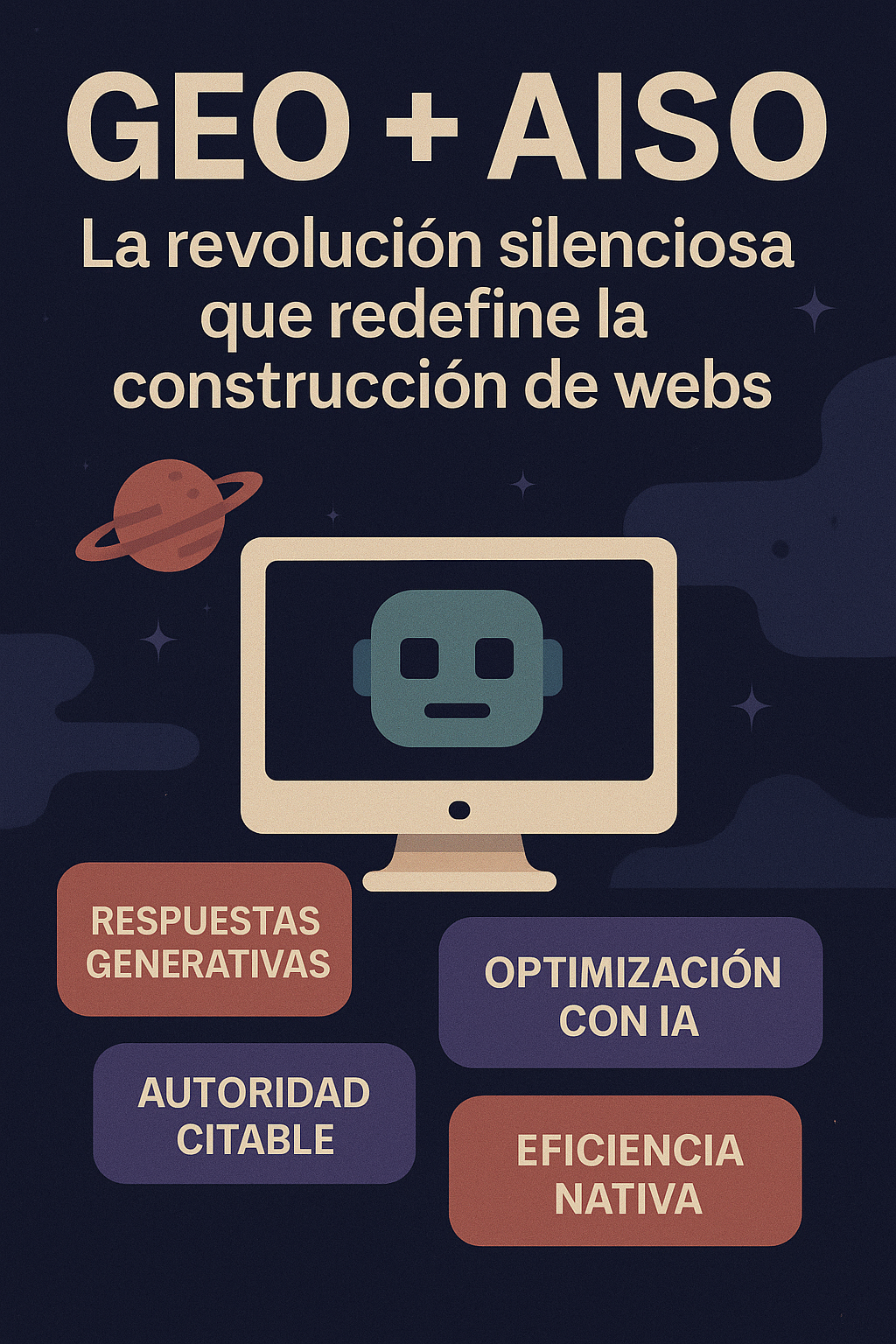
The convergence of optimisation for conversational AIs (GEO), contextual quality (AISO) and website generation is the dominant trend of 2025. Current data confirms a paradigm shift: it is no longer just about ranking, but about being the trusted, cited source for Artificial Intelligence.
The Irreversible Shift to Generative Answers (AISO and GEO)
Recent updates to search engines and user behaviour patterns (especially Gen Z) point in a clear direction:
Dominance of AI Overviews: Generative AI summaries, such as Google AI Overviews (formerly SGE), have become established, occupying a fixed position above search results. This drives the "Zero-Click Results" metric, where the AI answers without the user needing to visit the site, forcing brands to compete to be the cited source and not just the first link. Absolute priority for E-E-A-T (Experience, Expertise, Authoritativeness, Trustworthiness): AI, especially in sensitive areas, reinforces the need for authoritative content. Sites must show author credentials, cite sources and build solid Entity Authority to be considered worth mentioning. The conversational approach: Over 40% of Gen Z prefer conversational questions on AI platforms, which requires sites to be structured with concise questions and answers to feed those dialogues (hence the importance of FAQs and direct content). Multimodal search: AI is no longer limited to text. Indexing and optimising images, video and metadata with structured data becomes essential for visual content to be included in generative answers.
AI in Web Development: Efficiency and Native Optimisation
Artificial intelligence is changing not only how the web is consumed but also how it is built. The Google Cloud DORA 2025 report indicates that 90% of developers already use AI to increase productivity. Automation for semantic quality: AI tools within website builders are evolving not only to generate code or content but to guarantee GEO structure. This means assistants that automatically ensure:
A single H1. Correct implementation of structured data (Schema.org). Organisation of content blocks in AI-readable formats (lists, tables, summaries). Hyperpersonalised user experience: AI on the front-end enables real-time UX optimisation through machine learning, adapting design and content to user preferences. This improves conversion rates, a factor indirectly valued by AI engines as a quality signal. Speed and Core Web Vitals: AI favours sites that load fast. Platforms that, like Marte, guarantee a light, fast architecture by default (with technologies such as HTTP/3 and smart preloading) meet this fundamental technical requirement for AI accessibility.
In short, the battle for visibility is no longer a popularity contest (backlinks) but one of clarity and semantic authority. Optimisation for AI understanding must be a central, automatic feature of every site generated by Marte.