

The big day: Launching the new Marte Website 🚀
On this stellar day for your brand, the ship finally takes flight into an unexplored digital universe, marking the start of a journey full of opportunities and growth. With each step that unfolds, we prepare to conquer new horizons, where innovation and success merge in an odyssey that promises to transform the digital future of your business:
1. DNS configuration
* A and CNAME records: Configure your domain's DNS records to point to your server's IP address (A record) and, if needed, create a CNAME record for subdomains or alternate domains. This setup is essential so users can access your site without issues.
2. Enabling indexing
* Enable the toggle in Marte: In the Marte platform, make sure indexing is enabled. To do this, go to: * Global Settings > Global SEO Settings > Allow indexing in search results This allows search engines to index your website, increasing its visibility in search results.
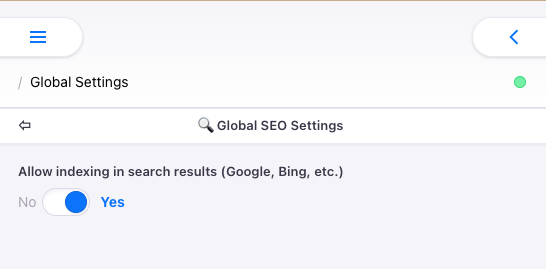
enable indexing
### 3. Sitemap and webmaster tools
* Submit the sitemap to Google Search Console: Generate and submit your site's sitemap to Google Search Console. This step helps Google crawl and index all your site's pages. * Check social media and Google Business: Ensure the new site is correctly linked on all social networks and update the information in Google Business for a consistent, up-to-date presence.
4. Basic SEO check and optimisation
Go through the following SEO optimisations to ensure your site is ready to compete in search results:
* Titles: Make sure each page has a unique, descriptive and compelling title, especially the homepage and pages aimed at generating clicks. * Meta descriptions: Write relevant, persuasive meta descriptions for each page to encourage clicks. They should summarise the content and highlight key benefits or information. * Keywords: Do keyword research and integrate the most relevant keywords in titles, meta descriptions and general content. * Tags and categories: Use tags and categories to organise content, making it easier to navigate and for search engines to index. * Internal links: Implement an internal linking strategy to distribute authority across pages and guide users through the site. * Google Maps: If your business has a physical location, add Google Maps to improve local visibility and user experience. * Minimum content: Publish at least three quality articles on topics relevant to your audience. This adds value and helps search rankings. * ALT attributes on images: Ensure all images have descriptive ALT tags, which is important for accessibility and image search SEO.
5. Additional points
* Favicon set: Don't forget to set a favicon. This small icon improves brand recognition in the browser and adds a professional touch. * Homepage optimisation: The homepage, as the most visited and often the entry point, should have a strong, relevant title and meta description. These are crucial for attracting clicks in search results.
Conclusion
Launching a website goes beyond simply publishing content. It's essential to ensure every element is optimised, from DNS configuration to integration with Google tools and a solid SEO strategy. Following this guide will help your site not only be online but also ready to rank well and deliver a great experience to users.
This methodology ensures that technical and content aspects are aligned for a successful launch. Let's get to work and best of luck with your project!